

How to Clean and Condition Leather Seats
How To Clean And Condition Leather Seats
Introduction
Leather is one of the most abused surfaces in a vehicle, and most people get it wrong from the start. They either over clean it, over condition it, or skip steps entirely. That is how you end up with dry, cracked, or prematurely worn seats.
The right process is simple. Clean it when it is dirty. Condition it when it actually needs it. Do not overdo either one.
If you are trying to keep leather looking good long term, it is not about using more product. It is about using the right product, the right way, at the right time. Done correctly, leather stays soft, natural, and holds up for years without looking greasy or worn out.
In this blog we will cover what conditioning actually does for leather, why the wrong cleaner can ruin it permanently, what a properly finished seat should look and feel like, and the full step by step process including perforated seats.
Why Conditioning Leather Matters
Leather needs to be conditioned to stay soft, flexible, and healthy over time. Without it, the material starts to dry out, which leads to stiffness, fading, and eventually cracking.
What a lot of people do not realize is that leather is constantly being exposed to heat, UV, and body oils. All of that slowly pulls moisture out of the material. Once that happens, the leather loses its natural feel and starts to break down.
Conditioning puts that moisture back in and keeps the leather from drying out. It also helps maintain that soft, natural finish instead of letting it turn hard or brittle.
Here is the part worth understanding. Paint you can fix. An interior does not work that way. Once leather cracks or splits, there is no correction step, you are reupholstering the seat. Everything here is preventive, because there is no fixing it later.
This is not something you need to do every week, but if it were my vehicle, I would condition the seats a few times a year to keep them in good shape long term.

Leather Conditioner
Feeds moisture back into the leather and keeps it soft and flexible. Natural finish, never greasy.
Shop Leather Conditioner →Why Cleaning Leather Properly Matters
Cleaning leather the right way is just as important as conditioning it. If the surface is not properly cleaned, nothing you apply afterward is going to work the way it should.
Leather builds up body oils, dirt, and grime over time, even if it looks clean. That buildup blocks conditioners from absorbing, so instead of feeding the leather, you are just putting product on top of contamination. That leads to uneven results and shorter durability.
Using the wrong cleaner makes things worse. Harsh chemicals or all purpose cleaners can strip the dye out of the leather, leaving it faded or blotchy. Some products can also stain the surface or leave behind residue that changes the appearance of the seat. Once that damage is done, it usually cannot be reversed.
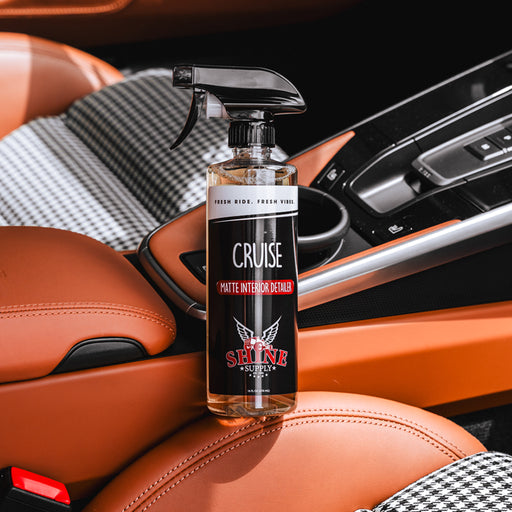
The safest approach is to use a dedicated, pH balanced leather cleaner. It removes dirt and oils without damaging the material or affecting the color. Leather & Interior Cleaner is ready to use and safe on leather, vinyl, plastic, suede, and Alcantara, and it leaves zero shine behind.
One thing to know up front. It is a cleaner, not a conditioner. It does not protect anything on its own, which is why the conditioning step still matters.
If the leather is dirty, clean it first. Done correctly, you are not just making it look better, you are setting it up to last.

Leather & Interior Cleaner
pH balanced and safe on leather, vinyl, plastic, suede, and Alcantara. Zero shine.
Shop Leather & Interior Cleaner →What Properly Cleaned And Conditioned Leather Should Look Like
Done correctly, leather should look natural, not shiny or greasy.
After cleaning, the surface should feel clean and dry, not slick or oily. After conditioning, it should feel soft and slightly enriched, but not wet or heavy.
If the seats look overly glossy, feel slippery, or leave residue on your hands, too much product was used or the process was done incorrectly.
The goal is simple. Clean, soft, and factory looking leather that holds up over time.
How To Clean And Condition Leather Properly
Now that you understand why this matters, here is the right way to do it. This is a simple process, but doing it correctly makes a big difference in how the leather looks and holds up over time.
If you are more of a visual learner, this video walks through the whole process step by step.
Step 1: Vacuum the seats thoroughly, making sure to remove all loose debris from seams, cracks, and crevices.
Step 2: Spray Leather & Interior Cleaner into your brush, not directly onto the seat. Gently agitate the leather using light pressure and controlled movements to clean the surface and work into the grain.
Step 3: Wipe the area clean with a microfiber towel, removing all cleaner and lifted dirt from the surface.
Step 4: Inspect the leather. If any grime or buildup remains, repeat the cleaning process as needed.
Step 5: Once the seat is clean and fully dry, apply Leather Conditioner to an applicator pad.
Step 6: If you have perforated seats, work the conditioner into your applicator pad first so it is evenly absorbed. This prevents excess product from being pushed into the perforations.
Step 7: Apply Leather Conditioner using light, even passes. Start with non perforated areas, then move to perforated sections to maintain control and avoid overloading the holes.
Step 8: Allow the conditioner to absorb for a few minutes, then lightly wipe the surface with a clean microfiber towel to level any excess and ensure an even finish.
Step 9: Do a final inspection to make sure the finish is even, with no missed spots or heavy areas.
Step 10: Repeat the process on the remaining seats.
Work out of direct sun and out of a hot car if you can. A hot surface flashes the product before you can level it, and you end up chasing streaks that were not the product's fault.
Common Mistakes To Avoid
Using too much product. More is not better here. Over applying cleaner or conditioner can lead to uneven results and a greasy finish.
Skipping the cleaning step. Conditioning dirty leather traps grime and prevents proper absorption.
Using the wrong cleaner. Harsh chemicals or all purpose cleaners can strip dye or stain the leather permanently. Always use a product like Leather & Interior Cleaner.
Spraying directly onto the seat. Spray the brush or the towel instead. It keeps overspray off your glass, screens, and seat belts, and it gives you control over how much product actually goes down.
Getting conditioner into perforations. If you have perforated seats, always work the product into your applicator pad before applying. This keeps you from pushing excess product into the holes and creating buildup.
Not leveling the conditioner. Leaving excess product on the surface will cause blotchiness and an unnatural look.
Rushing the process. Taking your time, especially during cleaning, is what gives you the best results.
Maintenance Tips
Leather does not need to be cleaned and conditioned every week.
Clean it when it is visibly dirty or starting to feel oily. Use Leather Conditioner every few months, depending on how often the vehicle is used.
High contact areas like driver seats and armrests will need attention more often than the rest of the interior.
While you are in there, the rest of the interior is on its own schedule. If you want the dash, console, and door panels covered too, we have a full interior protection guide that walks through picking a matte, satin, or restored finish.
Staying consistent with light maintenance is what keeps leather looking new long term.
Final Thoughts
If it were my vehicle, I would focus on keeping the process simple and consistent. Clean it when needed, condition it a few times a year, and avoid overusing products.
Done correctly, leather should look natural, feel soft, and wear evenly over time. Not shiny, not greasy, and not overworked.
A little bit of proper care goes a long way in keeping your interior looking the way it should.
All of the products used in this guide are available at ShineSupply.com. If you have any questions or need help choosing the right products for your setup, our team is always happy to help. You can call and talk to a real person at 805-535-4332 or email us anytime at info@shinesupply.com.