
Where to Use Clutch Ceramic Spray Sealant (And How to Apply It Right)
One Bottle, Every Surface: The Many Uses of Clutch Ceramic Spray Sealant

Most detail products do one thing. A wash soap washes. A tire dressing dresses tires. A wheel cleaner cleans wheels. There is nothing wrong with that. Specialty products tend to outperform jack-of-all-trades products at any single job.
Clutch is the rare exception. It is a water-based ceramic spray sealant with 16% SiO2, and over the years it has quietly become the most useful bottle in our shop. We use it daily on paint, wheels, trim, bed liners, and powder coated materials. Same product across all of it. The applicator pad changes with the surface (you do not want to put the pad you used on your wheels onto your paint), but the bottle on the shelf stays the same.
Think of Clutch as an all-surface protectant. It restores and darkens plastic trim, bed liners, and powder coat. It lays down real ceramic-based protection on paint. What it is not is a detail spray. Clutch is a sealant. It earns its place in the kit by doing what a sealant does, just on more surfaces than most.
Clutch is also the right call for anyone who is not ready to apply a solvent-based professional ceramic coating. Pro coatings are unforgiving, and a botched application is hard to undo. Clutch gives you real ceramic-based protection in a forgiving, water-based formula that is hard to mess up. Same family of chemistry, lower stakes.
What a Ceramic Spray Sealant Actually Does
A ceramic spray sealant sits between a traditional wax and a full ceramic coating. Here is the part most people get wrong. You do not spray it directly onto a panel and wipe it off like a detail spray. You spray it onto a microfiber applicator pad, apply it to the surface in even passes, let it set up, then wipe off the residue. That extra step is what lets the SiO2 bond properly and leave behind real protection instead of a smear of gloss.
The number that matters is the SiO2 concentration. A lot of spray sealants on the shelf have just enough silica to put it on the label. Clutch has 16%. That is high for a spray sealant and is the reason it can pull double duty as a standalone protectant on uncoated vehicles and as a topper that resets a tired ceramic coating.
Where Clutch Actually Works
This is the part most people get wrong. Clutch is not just for paint. Here is the full map of where it earns its place in the rotation.
1. Paint (Coated or Uncoated)
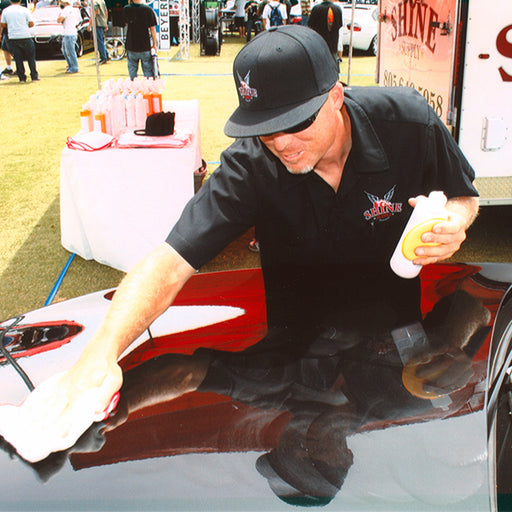
The most common use. On an uncoated vehicle, Clutch lays down real SiO2 protection that beads water and shrugs off road grime. On a vehicle that already has a ceramic coating, Clutch is the topper that restores slickness and brings back the water behavior the coating had on day one. You feel the difference the first time you run your hand across a panel after applying it.

2. Wheels (Factory, Aftermarket, and Powder-Coated)
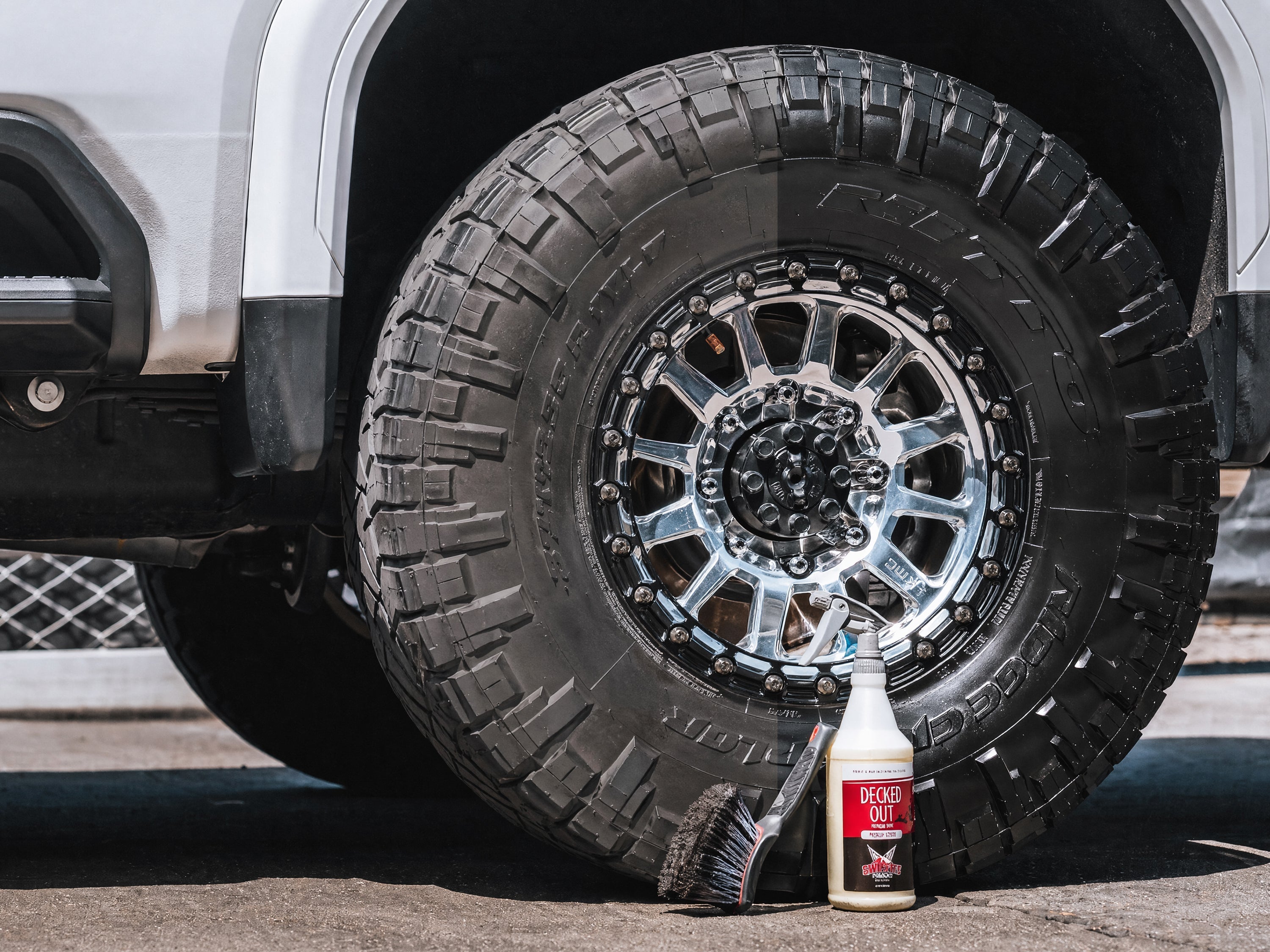
Wheels take the worst abuse on the vehicle. Brake dust, road grime, and heat all conspire to wreck a finish. A layer of Clutch on clean wheels gives brake dust something slick to sit on instead of something porous to bake into. Next wash, the wheels come clean with less effort. Safe on factory finishes, aftermarket wheels, and powder-coated wheels.
3. Plastic Trim
Cladding, bumpers, mirror caps, anywhere unpainted plastic lives. Clutch deepens the color, restores some life, and adds a thin layer of protection that helps the trim fight UV fade. Use sparingly and buff it in evenly. A little goes a long way on trim.

4. Bed Liners
Sprayed bed liners fade. Sun, rain, gear getting dragged across them, all of it. Clutch on a faded sprayed bed liner restores depth and color in a way that always surprises people the first time they try it. Apply with an applicator pad, let it soak in, and rub it out.

5. Bonus Uses: UTVs, Dirt Bikes, and Outdoor Gear
This is where the "one bottle, many uses" tag really earns out. UTVs, side-by-sides, dirt bikes, patio furniture, painted metal mailboxes, powder-coated grills, anything that lives outside and takes weather and abuse. Apply a coat every few months. Dirt rinses off easier, plastic and powder coat fade slower, and colors stay brighter. We do not see a lot of this in the shop because we do not detail those vehicles, but every customer who runs Clutch at home ends up finding uses we never thought of.
How to Apply Clutch
Clutch is always applied to a clean surface. There are two ways to lay it down. Pick the method that fits the surface you are working on.
Apply With a Microfiber Applicator Pad
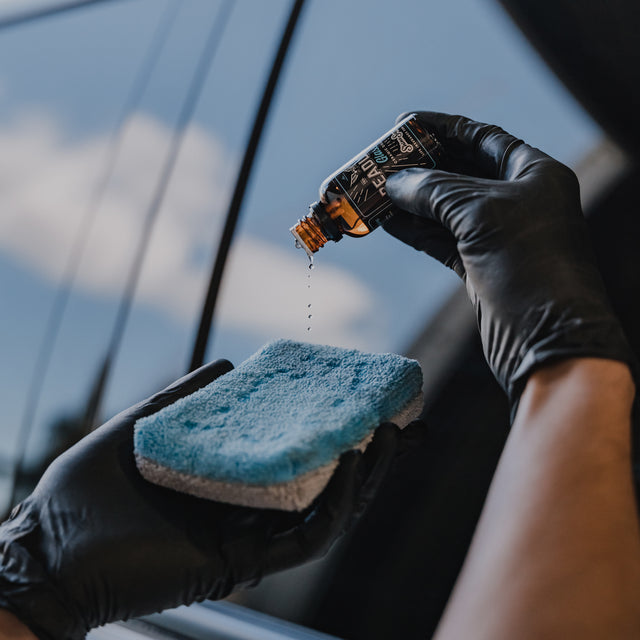
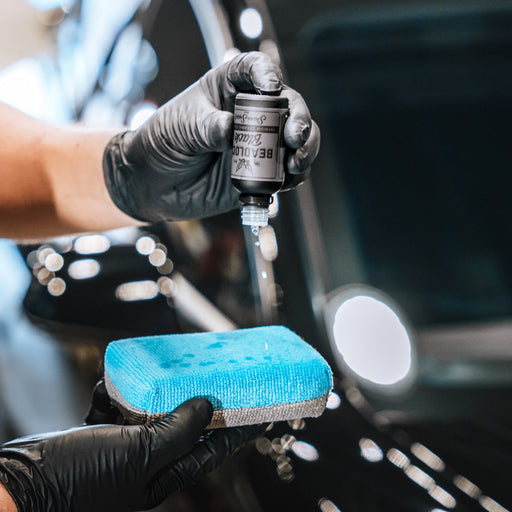
The cleanest, most controlled way to apply Clutch. Spray two to three mists of Clutch onto a microfiber applicator pad (the blue one works great), then spread it across the surface in even, overlapping passes. The pad lays down a thin, uniform layer without overspray. This is the method we use most often at Stevens Detailing.
Spray Directly on the Surface, Then Rub Out
For wheels, plastic trim, and bed liners, you can mist Clutch directly onto the surface, let it soak in for a moment, then rub it out with a clean microfiber applicator pad. This method is fast for textured surfaces where you want the product to settle into the finish before you spread it.
How to Apply Clutch to Paint (Watch the Walkthrough)
The way we apply Clutch to full vehicles in the shop. Spray Clutch onto a microfiber applicator pad (or use a pad sprayer setup) and apply it across the full vehicle, panel by panel, in even sections. Once the entire vehicle is coated, wait 15 to 30 minutes for the product to set up, then buff off the residue with clean microfiber towels. The longer you let it set up before buffing, the easier it levels.
How to Apply Clutch to Wheels (Watch the Walkthrough)
Wheels are where Clutch quietly does some of its best work. On clean wheels, including powder-coated wheels, Clutch lays down a slick layer that keeps brake dust from baking in. Spray Clutch directly onto the wheel or onto a dedicated wheel applicator pad, work it across the face and spokes, then buff off the residue. Watch the full walkthrough below.
On Trim, Powder Coat, and Bed Liners
All three apply the same way. You have two options. Spray Clutch directly onto the surface, let it soak in for a moment, then level it out with a clean microfiber applicator pad. Or spray Clutch onto the applicator pad first, then spread and level. Either path works. Just keep your coverage even.
Pro Tips
- Use a fresh applicator pad. The blue microfiber applicator pads are made for this kind of work. Spray two to three mists onto the pad, then spread evenly. A dirty or saturated pad will streak.
- Less is more. A few mists per section is plenty. Over-applying does not increase protection. It just makes the residue harder to buff off and wastes product.
- On paint, the longer it sets up, the easier it levels. Apply the full vehicle first. Once the last panel is coated, the first panel is already pulling close to ready. The longer Clutch has to flash before you buff, the easier it comes off and the more uniform the finish looks.
- Use it as a coating topper. If you have a ceramic coating and the water behavior has slowed down, Clutch on top of the coating wakes it back up. Most coatings benefit from a Clutch topper every 3 to 4 months.
- Shake before each use. Water-based ceramic sprays separate at rest. A quick shake keeps the silica evenly suspended in the bottle.
Why We Built Clutch the Way We Did
Honest story. Clutch was built for paint. Specifically, for customers who wanted real ceramic-based protection but were not comfortable applying a solvent-based pro coating. Pro coatings are unforgiving. If you do not level them in time, you end up doing real work to fix it. Sometimes a full repolish to bring the panel back. Clutch took that risk out of the equation. Water-based for forgiveness, 16% SiO2 for real protection, simple enough to apply at home.
What we did not plan for is what happened next. Clutch has been on the market since 2016. Over ten years in, we kept hearing the same thing from customers and seeing the same thing in the shop. People were running it on plastic trim and the color was coming back. They were hitting faded powder coat and the depth was returning. They were treating bed liners and the black was darkening up like new. They were laying it on wheels and the finish was holding longer between washes.
That is how Clutch became the most versatile bottle in the lineup. Not by design. By customers and our own crew at Stevens Detailing realizing that what we built to protect paint also rejuvenates and protects plastic trim, powder coat, bed liners, and wheels. Same chemistry, same application method, more surfaces than we ever planned for.
One Bottle. Every Surface.
Clutch is the most versatile product in the Shine Supply lineup. Paint, wheels, trim, bed liners, powersports, outdoor gear. It does the work.
Shop Clutch →
Clutch Ceramic Spray Sealant
Water-based 16% SiO2 spray sealant. Paint, wheels, trim, bed liners, powersports, outdoor gear.
Shop Clutch →Frequently Asked Questions
How long does Clutch last on paint?
You can expect 3 to 4 months of protection with proper maintenance.
Can I just apply Clutch to my paint?
No. We recommend claying the paint first to pull any contamination off the surface so Clutch can fully bond to the clear coat. Do a proper wash and decontamination before applying Clutch. Skip that step and you are sealing in whatever is sitting on the paint.
Is Clutch safe on matte paint and matte PPF?
Yes. Completely safe. Clutch darkens and rejuvenates the finish without changing the gloss level. It adds color and depth instead of shine. After applying, you can wipe the surface down with Throttle to settle the finish.
Can I layer Clutch on top of Clutch?
Yes. Wait an hour after the first application, then apply another layer the same way. Layering can add a touch more depth on darker paint and slightly extend protection.
Does Clutch replace a full ceramic coating?
No, and we do not pretend it does. A professional ceramic coating gives you years of protection. Clutch gives you months. The two work together. If you want long-term protection, apply a Shine Supply ceramic coating and use Clutch as the topper to extend it. If you are not ready for a full coating, Clutch on its own is real protection that holds up.