

How to Remove Bugs From Your Paint (and Why It Matters)
How to Remove Bugs From Your Paint (and Why It Matters)

Bug splatter is one of the most overlooked sources of paint damage. Most people see it as a cosmetic problem. Park the car for a few days after a long drive and it just looks dirty. The reality is a lot worse than that, and the longer those bug guts sit on your paint, the more it costs you to fix.
This guide covers what bug residue actually does to your finish, why it has to come off as soon as possible, and the two ways we remove it at the shop using Bug Off and a Bug Scrubber Pad.
Prefer to watch? The full bug removal walkthrough.
Why Bug Guts Damage Paint
Bug residue is acidic. When a bug hits the front of your car at speed, it leaves behind proteins and stomach acids that immediately start interacting with your clear coat. In the sun and heat, that reaction speeds up. What starts as a smear of bug guts turns into a chemical that eats into the surface of the clear coat.
Leave it long enough and you stop dealing with a wash problem. You start dealing with a paint correction problem. Light bug etching can sometimes be polished out. Heavier etching can require wet sanding to fully remove. And in some cases, even after correction, the etching has gone deep enough into the clear coat that you are left with permanent staining or an outline of where the bug used to be.

We take bug removal seriously during the wash process at Stevens Detailing. It is always part of our prep, using the designated products and tools for the job.
The Tools You Actually Need
Bug removal comes down to three things working together: a chemical that breaks down the acidic residue, lubrication so you can agitate without scratching, and a tool that grabs the debris off the surface without grinding it back into the clear coat.
The Chemistry: Bug Off
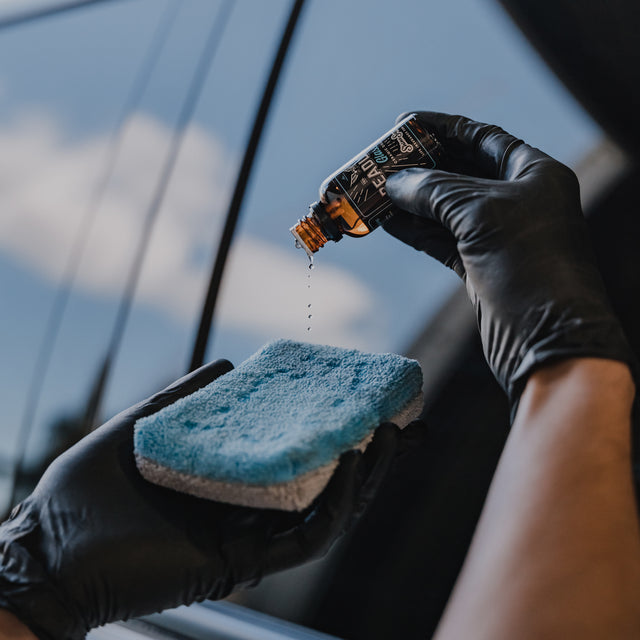
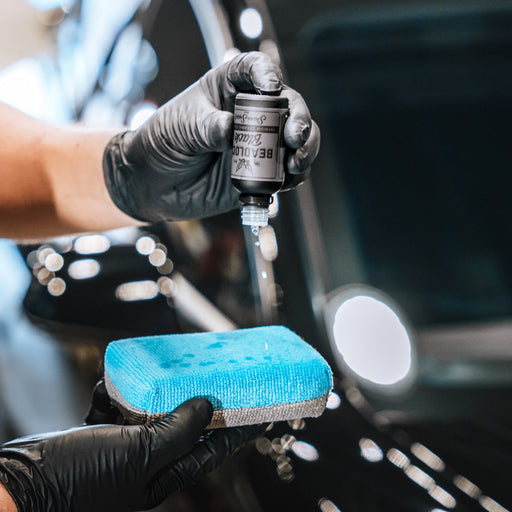
Bug Off is the dedicated bug remover we use at the shop. It is concentrated and dilutes 3 parts water to 1 part product. Once mixed, it neutralizes the acidic residue and breaks the bond between the bug debris and your paint so it lifts cleanly during the wash. Safe on paint, glass, aluminum, chrome, plastics, vinyl, wraps, and PPF.
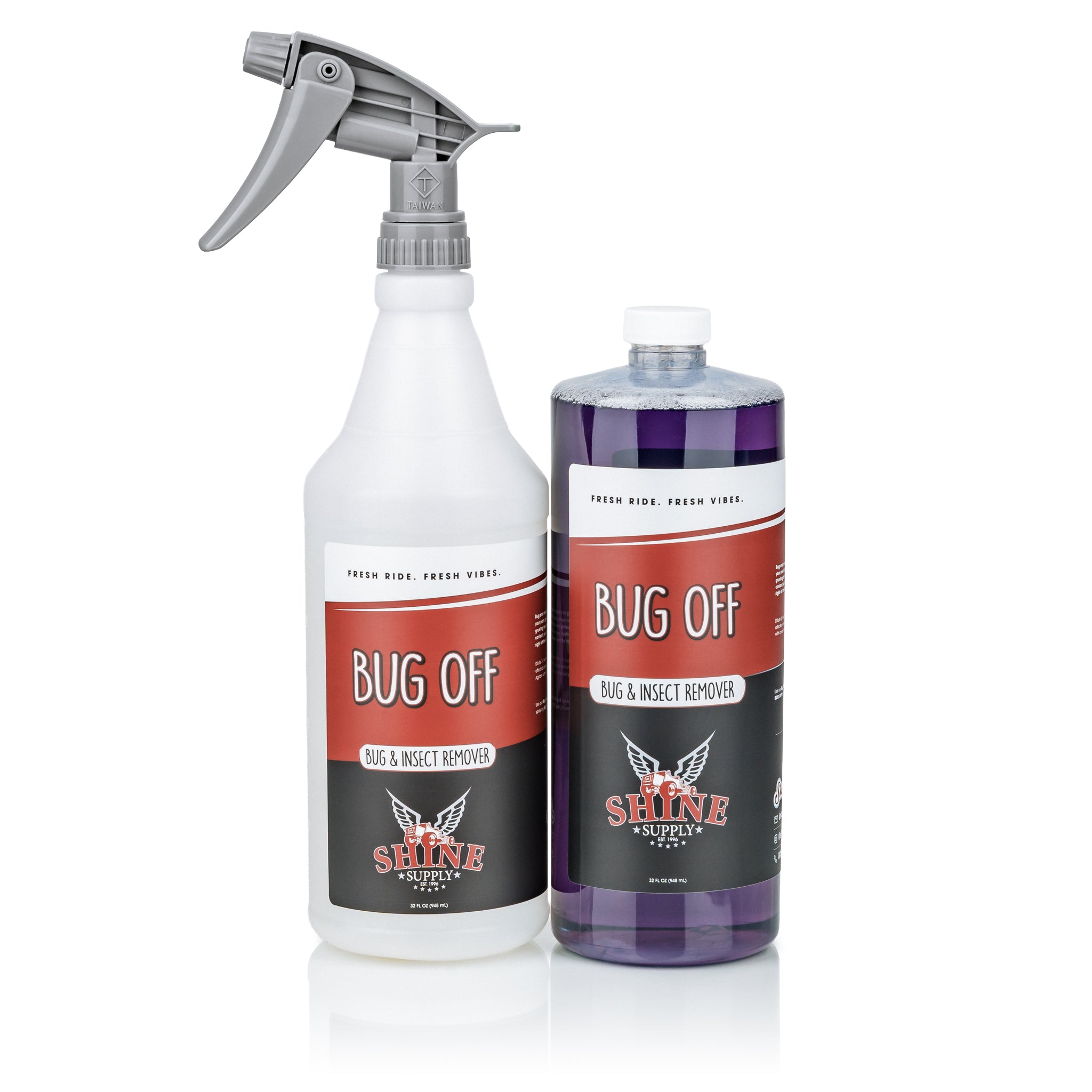
Bug Off 32oz with Spray Bottle
Concentrated bug remover that neutralizes acidic residue before it etches your clear coat. Safe on paint, glass, plastics, wraps, and PPF.
Shop Bug Off →The Agitation: Bug Scrubber Pad
Once Bug Off has done its work, you still need a tool to physically lift the debris off the surface. A regular wash mitt does not have the texture to do this well, and using a brush or aggressive sponge will scratch the paint. The right tool is a soft mesh bug scrubber that grabs the debris without grinding it back into the clear coat.

Bug Scrubber Pad
Compact 4 by 6 pad with a soft scrub mesh surface that lifts bug debris without scratching the clear coat.
Shop Bug Scrubber Pad →Two Ways to Remove Bugs
There are two methods that work. Both use Bug Off and a bug scrubber. The difference is the order, and the second method is the one we prefer at the shop because it adds an extra layer of protection against marring.
Method 1: Spray, Dwell, Scrub

Pre-Rinse The Vehicle
Knock off all the loose dust and debris with a strong rinse. The cleaner the panel before you start the bug step, the less chance you have of dragging grit across the paint while you scrub.
Spray Bug Off On The Affected Areas
Mix Bug Off 3 to 1 in a spray bottle. Spray it directly on the bug heavy panels: bumper, hood, grille, windshield, and side mirrors. Let it dwell for a minute or two. Do not let it dry on the surface.
Agitate With A Bug Scrubber Pad
Using the mesh side of your Bug Scrubber Pad, gently work the bug debris off the surface. Do not press hard. Let the chemistry and the mesh do the work.
Rinse And Continue Your Wash
Rinse the panel thoroughly, then move into your normal contact wash from there.
Method 2 (Our Preferred): Bug Off Plus Soap Lubrication
This is the version we run at Stevens Detailing because it adds a second layer of lubrication and almost completely removes the risk of marring while you scrub.

Pre-Rinse The Vehicle
Same starting point. Get the loose stuff off first.
Spray Bug Off Onto The Bug Areas
Cover the bumper, grille, hood, windshield, and any panel with bug hits. Let it sit briefly while you set up the next step.
Foam Or Soap Over The Top
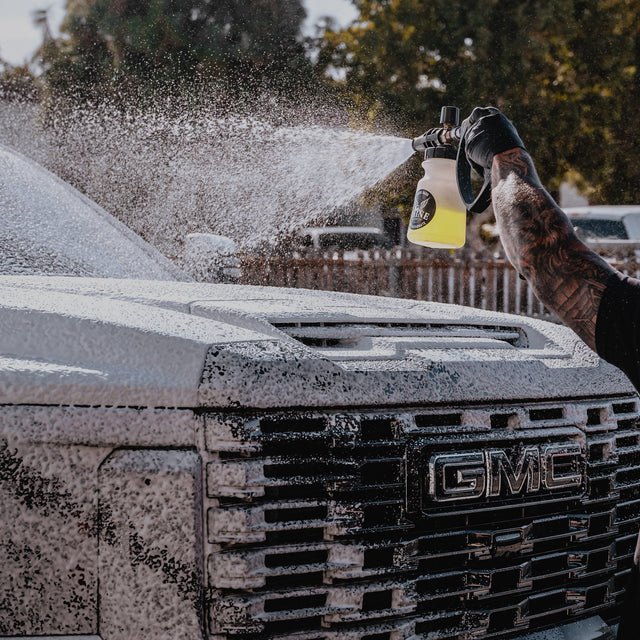
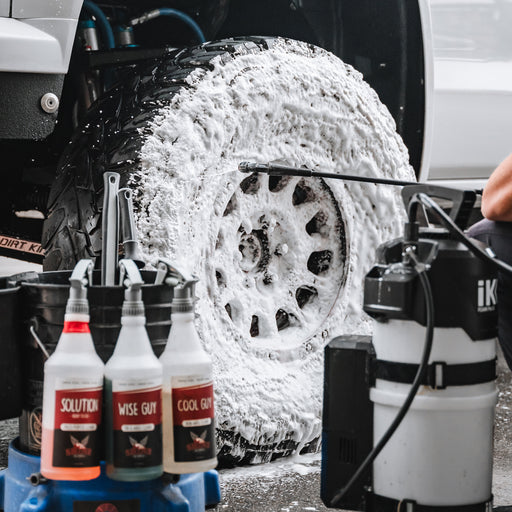
This is the part that makes the difference. Foam your soap directly over the Bug Off, or use your wash bucket and lay soap on top with your wash mitt. The soap layer keeps everything wet, gives Bug Off more time to break down the residue, and adds the lubrication you need to scrub safely.
Agitate With Your Bug Scrubber Pad
Now you can work the surface with confidence. The combined Bug Off plus soap layer means almost zero chance of marring. Work the mesh side of the Bug Scrubber Pad across each bug heavy panel, light pressure only, and let the chemistry plus lubrication do the work.
Rinse And Finish Your Wash
Rinse everything off and continue with your normal wash routine.

Pro Tips
- Get the bugs off as soon as you can. The longer they sit, the more they etch. After a long highway drive, do not park the car for the week and assume you will get to it later. The damage is happening now.
- Work in the shade on a cool panel. Hot paint dries Bug Off too fast and reduces dwell time. Pull the car into shade or do this step early in the day.
- Never let Bug Off dry on the surface. If it dries, it can leave its own residue that is harder to remove than the bugs. Spray, agitate, rinse. Keep it moving.
- Front panels only. No reason to spray Bug Off across the entire vehicle. Focus on the bumper, hood, grille, mirrors, and windshield. That is where the bugs are.
- If a bug etch is already there, do not scrub harder. Once it has etched into the clear coat, more pressure will not fix it. That is a paint correction conversation, not a wash one.
- Build it into your bug season routine. If you drive through bug country, plan on a Bug Off step at every wash from spring through early fall. It takes five minutes and saves your clear coat.

Why Bug Off Works The Way It Does
Bug residue is acidic, so the chemistry has to neutralize that acid and break the bond between the dried debris and your paint. Bug Off does both at the same time. The concentrate is strong enough to handle heavy splatter on the front of a vehicle that just came back from a road trip, and dilutes down to a safe ratio for daily use across paint, glass, plastic, and trim.
The reason it ships concentrated comes down to how we use it at the shop. The same bottle handles a light bug step on a daily driver and a heavy front bumper on a long-haul vehicle. Mix it 3 to 1, fill a Shine Supply spray bottle, and you have one product that covers every bug situation you will run into. Using it straight is wasteful and can damage plastics and trim, which is why dilution is non-negotiable.
This is also why Bug Off plays well with soap. The acidic neutralization happens fast, but the lubrication you get from foaming or soaping over the top is what protects the paint from the mechanical scrubbing step. The two together is the safest way to remove bug debris without touching the clear coat any harder than you have to.
Bugs Off Before They Etch
Bug Off, a Bug Scrubber Pad, and a few minutes during your normal wash. That is what stands between bug splatter and a paint correction job. Build it into your routine.
Shop Bug OffFrequently Asked Questions
How fast do bug guts actually start damaging paint?
It starts immediately. The acidic residue begins reacting with the clear coat as soon as it lands. In direct sun and heat, you can see noticeable etching in as little as a few hours. The longer it sits, the deeper it goes.
Can I just use my regular wash soap to get bugs off?
Soap alone will not break the acidic bond. You can soften light splatter with soap and a wash mitt, but heavy bugs need a dedicated bug remover like Bug Off to neutralize the acid. Soap is a wash product. Bug Off is a chemistry product. They do different jobs.
If a bug has already etched my clear coat, will Bug Off remove the etching?
No. Bug Off removes the bug residue. Once the residue has etched into the clear coat, that is a physical defect in the paint. Light etching can sometimes be polished out, heavier etching may need wet sanding, and the deepest etching can leave a permanent mark even after correction.
Is it safe to use Bug Off on a ceramic coated car?
Yes, when used at the proper 3 to 1 dilution and not allowed to dry on the surface. Spray, dwell briefly, agitate gently, rinse. The same protocol that protects your clear coat protects your coating.
Can I use a regular sponge or wash mitt instead of a Bug Scrubber Pad?
You can in a light bug situation, but a regular wash mitt does not have the texture to lift dried bug debris efficiently. The mesh side of a Bug Scrubber Pad is designed to grab the residue and let it release into the soap and water without grinding it back into the clear coat. For anything heavier than a light splatter, the right tool matters.
%20%7C%20Shine%20Supply%0A%20%20%0A%20%20%0A%0A%0A%0A%0A%20%20%0A%20%20%0A%20%20%20%20Shine%20Supply%0A%20%20%20%20/%0A%20%20%20%20Blog%20Posts%0A%20%20%20%20/%0A%20%20%20%20Removing%20Bugs%20From%20Paint%0A%20%20%0A%0A%20%20%0A%20%20How%20to%20Remove...)